
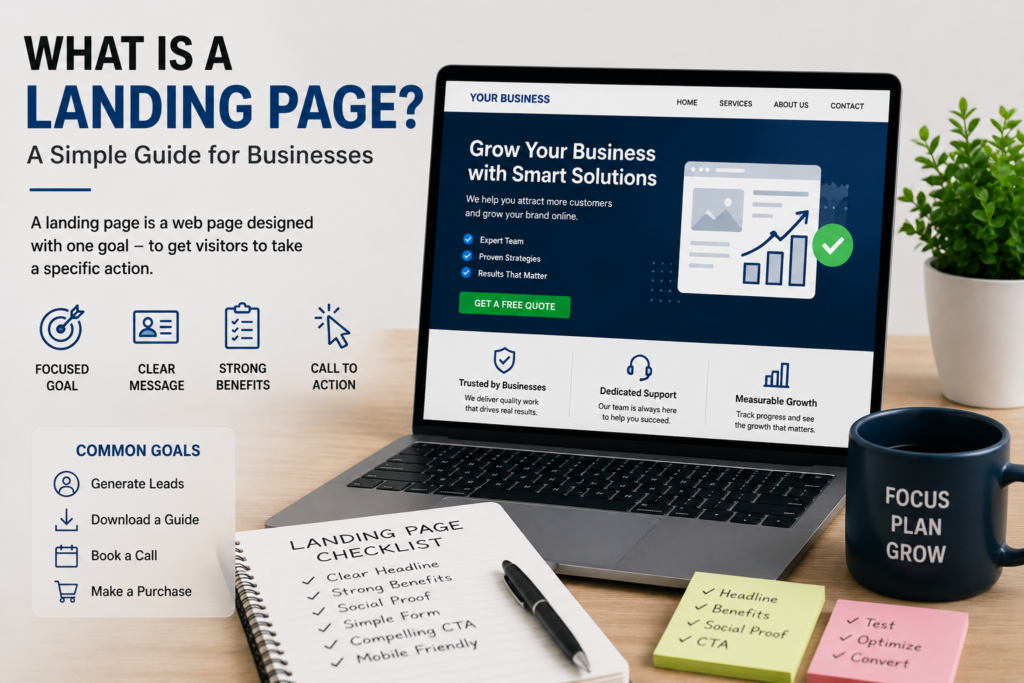
A landing page is a web page that focuses on one main goal. Businesses use landing pages to promote a product, service, offer, or campaign. The page guides visitors toward one clear action.
That action may include filling out a form, booking a call, downloading a file, signing up for a service, or buying a product.
A normal website can contain many pages and links. A landing page keeps things simple. It focuses on one offer and helps visitors make a decision.
What Is the Purpose of a Landing Page?
A landing page helps a business turn website visitors into leads or customers.
For example, imagine that you run a digital marketing agency. You launch a Google Ads campaign for SEO services. You can send people who click your ad to a dedicated SEO landing page.
The page can explain your SEO service, show its benefits, answer common questions, and include a “Get a Free Quote” button.
This approach gives visitors a clear path. They do not need to search through your entire website to find the service.
A good landing page should answer three simple questions:
- What are you offering?
- How can the offer help me?
- What should I do next?
Landing Page vs Homepage
Many people confuse a landing page with a homepage. They serve different purposes.
Your homepage introduces your business. It may show several products, services, company information, blog posts, and contact options.
A landing page focuses on one specific offer.
For example, your homepage may promote SEO, social media marketing, website design, and Google Ads. Your SEO landing page would focus only on SEO.
This focused structure can help visitors understand your offer faster.
Types of Landing Pages
Businesses can create different landing pages for different marketing goals.
1. Lead Generation Landing Page
A lead generation landing page helps you collect information from potential customers.
The page usually includes a form. Visitors may enter details such as their name, email address, phone number, or business name.
You can then contact these leads and continue the sales process.
For example, a marketing agency can offer a free website audit in exchange for a visitor’s contact details.
2. Product Landing Page
A product landing page promotes one specific product.
It can include:
- Product images
- Product benefits
- Main features
- Customer reviews
- Pricing
- Frequently asked questions
- A purchase button
A clear product page can help customers understand the product before they buy it.
3. Service Landing Page
A service landing page promotes one particular service.
For example, a digital marketing company may create separate pages for:
- SEO services
- Google Ads services
- Social media marketing
- Content marketing
- Website design
- Local SEO
Each page can target a specific audience and keyword.
4. Click-Through Landing Page
A click-through page gives visitors information before they move to another page.
For example, the page may explain a product and then direct visitors to a checkout page.
The main goal is to encourage visitors to click the next button.
Important Elements of a Good Landing Page
A successful landing page needs a clear structure. Every section should support the main goal.
Write a Clear Headline
Your headline should tell visitors what you offer right away.
Avoid confusing or vague headlines.
For example:
Get More Customers With Professional SEO Services
This headline clearly explains the service and its main benefit.
Add a Strong Call to Action
A call to action (CTA) tells visitors what to do.
You can use buttons such as:
- Get a Free Quote
- Book a Free Call
- Start Today
- Download the Guide
- Get Started
- Buy Now
Choose one main action for the page. Keep the CTA easy to find.
Explain the Benefits
Tell visitors how your product or service can help them.
Do not only list features. Explain the value behind each feature.
For example, instead of saying “Monthly SEO Reports,” explain that your reports help customers track website traffic, keyword rankings, and SEO progress.
Simple explanations can help visitors understand your offer.
Keep the Design Simple
A landing page should not overwhelm visitors.
Avoid adding too many links, pop-ups, animations, or unrelated information.
Use clear headings and short paragraphs. Give visitors enough space to understand the offer and take action.
Add Customer Reviews
Reviews can help build trust.
You can add genuine testimonials, case studies, ratings, or customer results to your landing page.
For example, you can show how your service helped a customer increase website traffic or generate more leads.
Always use real customer feedback. Avoid creating fake reviews.
Make It Mobile-Friendly
Many people use smartphones to browse the internet. Your landing page should work well on small screens.
Check your:
- Text size
- Buttons
- Images
- Forms
- Page layout
- Loading speed
Make sure visitors can read your content and complete the main action without difficulty.
Why Do Businesses Need Landing Pages?
Landing pages can support many digital marketing campaigns.
Businesses can use them with:
- Google Ads
- Social media ads
- Email marketing
- SEO campaigns
- Content marketing
- Influencer marketing
- Promotional campaigns
A landing page can match the message of your marketing campaign.
For example, if your ad promotes “Affordable Website Design for Small Businesses,” your landing page should focus on affordable website design.
This message match can create a smoother experience for visitors.
Landing Pages and SEO
You can also optimize a landing page for search engines.
Basic SEO practices can help search engines understand your page.
You can:
- Use relevant keywords
- Write a useful page title
- Create a clear URL
- Add descriptive headings
- Optimize images
- Improve page speed
- Make the page mobile-friendly
- Add useful internal links
Use keywords naturally. Do not repeat the same keyword again and again.
Your main goal should remain clear communication with your visitors.
How to Create a Landing Page
Start by choosing one clear goal. Decide what you want visitors to do.
Next, learn about your target audience. Understand their needs, problems, and expectations.
Then create your headline and explain your offer. Add the main benefits and supporting information.
Include testimonials or other trust signals when they fit your business.
Add one strong CTA. Keep the page simple and easy to navigate.
Finally, test your page. Try different headlines, images, CTA text, and layouts. Check your conversion data and improve the page based on your results.
Final Thoughts
A landing page gives your business a focused way to promote a product, service, or offer. It helps visitors understand your message and take a specific action.
A strong landing page uses simple language, a clear headline, useful benefits, trust signals, and a strong CTA. It should also load quickly and work well on mobile devices.
You can use landing pages with SEO, Google Ads, social media, email marketing, and other digital marketing strategies.
The key is simple: focus on one audience, one offer, and one main action. When you remove distractions and give visitors a clear next step, your landing page can help you generate more leads and grow your business.