

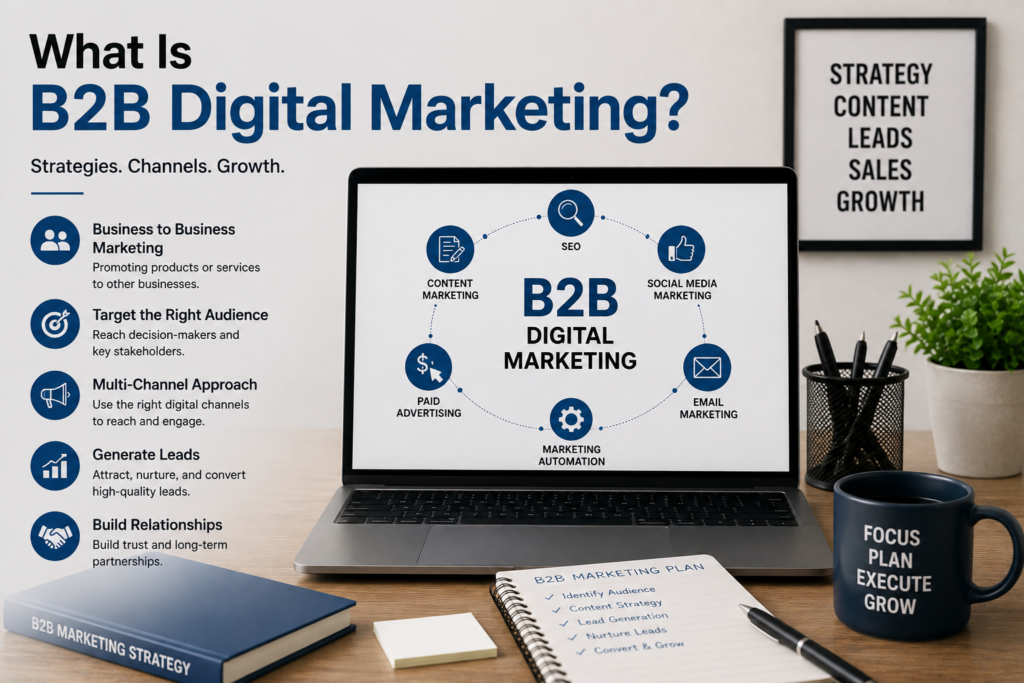
B2B digital marketing helps businesses promote their products and services to other businesses. The term B2B means “business-to-business.” It describes companies that sell to other companies instead of selling directly to individual customers.
For example, a software company may sell accounting software to small businesses. A digital marketing agency may offer marketing services to other companies. A manufacturer may supply products to retailers. These businesses can use B2B digital marketing to find potential customers and grow their sales.
B2B marketing often requires a different approach than B2C marketing. Business buyers usually spend more time researching their options. They may compare several companies before making a decision. A strong digital marketing strategy can help businesses reach these buyers at different stages of their buying journey.
What Does B2B Digital Marketing Mean?
B2B digital marketing uses online channels to promote products or services to businesses. It helps companies attract potential buyers, build relationships, generate leads, and increase sales.
Businesses can use several digital marketing channels for B2B marketing, including:
- Search engine optimization
- Content marketing
- Social media marketing
- Email marketing
- Paid advertising
- Website marketing
- LinkedIn marketing
- Marketing automation
A B2B digital marketing strategy often combines several of these channels. The right combination depends on the business, target audience, industry, and marketing goals.
How Does B2B Digital Marketing Work?
B2B digital marketing starts with understanding the target customer. A business needs to know who makes buying decisions and what problems they want to solve.
For example, a software company may target business owners, marketing managers, or IT managers. Each person may have different needs and concerns.
After identifying the target audience, the business creates content and campaigns that address those needs.
A typical B2B marketing process may look like this:
Research → Attract → Educate → Generate Leads → Nurture → Convert → Retain
The business first attracts potential customers through search engines, social media, advertising, or content. It then provides useful information that helps prospects understand the product or service.
When a visitor shows interest, the business can collect their contact information through a form, newsletter, consultation request, or other lead generation method.
The business then follows up with useful content and sales communication. This process can eventually turn a lead into a customer.
1. SEO for B2B Businesses
Search engine optimization plays an important role in B2B digital marketing. Many business buyers use Google to research products and services.
They may search for terms such as:
- Best CRM software for small businesses
- B2B marketing agency
- Business accounting software
- Website development company
- IT services for companies
A B2B company can create useful website pages and blog posts around relevant keywords.
SEO can help the business appear in search results when potential customers look for solutions. It can also bring consistent organic traffic to the website.
2. Content Marketing
B2B buyers often need detailed information before they make a purchase. Content marketing can help businesses provide that information.
A B2B company can create:
- Blog posts
- Case studies
- Whitepapers
- E-books
- Guides
- Videos
- Webinars
- Industry reports
- Product comparisons
Good content should answer customer questions and solve real problems. It should not focus only on selling.
For example, a cybersecurity company can publish an article about common security risks for small businesses. This content can attract people who may later need cybersecurity services.
3. Social Media Marketing
Social media can help B2B companies build awareness and connect with decision-makers.
LinkedIn plays an important role in B2B marketing because professionals and businesses use the platform to share information, build relationships, and find opportunities.
B2B companies can also use platforms such as Facebook, Instagram, YouTube, and X depending on their audience.
Businesses can share educational content, company updates, customer success stories, industry news, and useful tips.
4. Email Marketing
Email marketing helps businesses stay connected with potential and existing customers.
A company can send emails about:
- New products
- Helpful resources
- Industry updates
- Company news
- Special offers
- Webinars
- Case studies
B2B sales cycles can take weeks or months. Regular and useful emails can keep a business in front of potential customers during this period.
5. Paid Advertising
Paid advertising can help B2B businesses reach specific audiences faster.
Companies can run campaigns through search engines, social media platforms, and other advertising networks.
For example, a business can create search ads for people looking for a specific service. It can also target professionals based on factors such as industry, job role, or business interests on suitable advertising platforms.
Businesses should track their campaigns carefully. They can then improve their ads and spend their budgets more effectively.
Why Is B2B Digital Marketing Important?
B2B digital marketing gives businesses a way to reach customers where they already spend time: online.
It can help businesses:
- Reach a larger audience
- Generate qualified leads
- Build brand awareness
- Increase website traffic
- Build trust
- Educate potential customers
- Support the sales team
- Improve customer relationships
- Increase revenue
Digital marketing also gives businesses access to useful data. Companies can track website visits, leads, clicks, conversions, and other important metrics.
This data helps marketers understand which strategies work and where they need to make improvements.
B2B Digital Marketing vs B2C Digital Marketing
B2B and B2C marketing share many digital channels, but their approaches can differ.
B2B marketing targets businesses and professional decision-makers. It often focuses on expertise, trust, value, and long-term relationships.
B2C marketing targets individual consumers. It may focus more on emotions, convenience, price, lifestyle, and quick purchasing decisions.
B2B purchases can also involve several people. A manager may research a product, while another person approves the budget. This makes the B2B buying process more complex.
How to Create a B2B Digital Marketing Strategy
Start by defining your target audience. Identify the businesses you want to reach and the people involved in buying decisions.
Next, research their problems and search behavior. Find out what information they need before they buy.
Then choose the right marketing channels. Create useful content, optimize your website, run targeted campaigns, and build a system for collecting and following up with leads.
Finally, measure your results. Track important metrics such as website traffic, leads, conversion rates, cost per lead, and sales.
Conclusion
B2B digital marketing helps businesses connect with other businesses through online channels. It uses strategies such as SEO, content marketing, social media, email marketing, paid advertising, and website optimization.
A successful B2B strategy does more than generate traffic. It attracts the right audience, builds trust, provides useful information, and guides potential customers toward a purchase.
Because business buyers often research their options before making a decision, a strong online presence can give your company a major advantage. With the right strategy and consistent effort, B2B digital marketing can help businesses generate better leads, build strong relationships, and achieve long-term growth.